
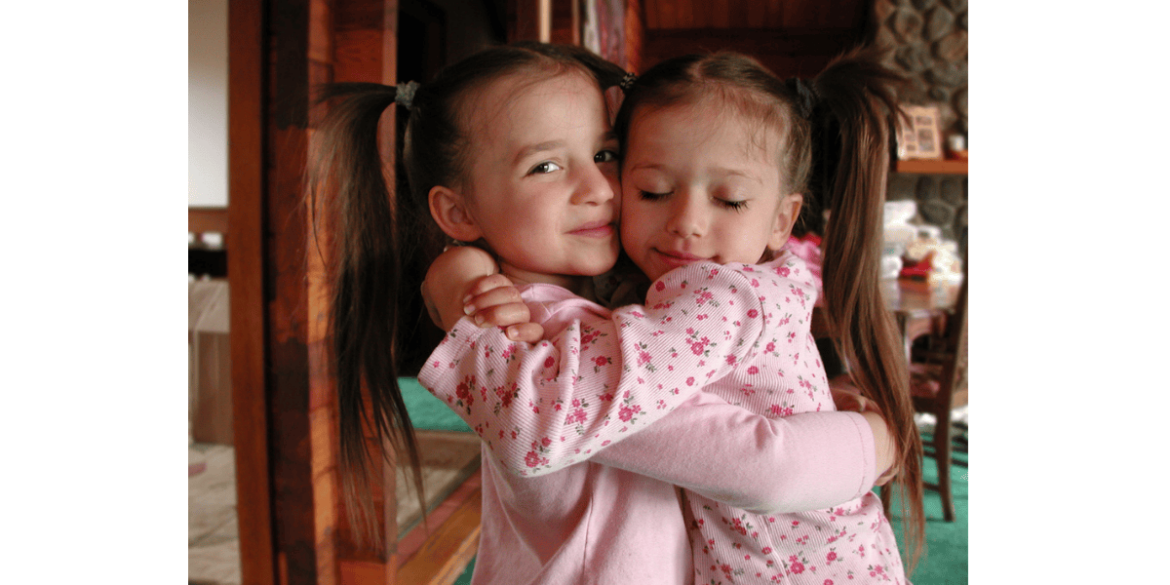
A new academic commentary has brought to light the profound psychological trauma endured by children abducted during the Hamas attack on Israel, focusing particularly on the forced separation of three-year-old identical twins. Drawing on decades of research in child development and twin studies, the authors highlight the unique emotional cost of severed family bonds during wartime and urge professional organisations and the international community to prioritise family reunification as a critical component of psychological recovery for children exposed to conflict.
A recent commentary published in the International Journal on Child Maltreatment addresses one of the most painful and complex aspects of the ongoing Hamas-Israel war: the abduction of children, the forced separation of families, and the deep psychological consequences for the youngest victims.
Co-authored by Professor Ariel Knafo-Noam of the Psychology Department at the Hebrew University of Jerusalem and Professor Nancy L. Segal of the Psychology Department and Twin Studies Center at California State University, Fullerton, the article centres on the case of three-year-old identical twin girls who were abducted by Hamas on 7 October 2023. The twins were taken from their home in southern Israel and held separately for ten days before a dramatic reunion—after their mother, also held hostage, recognised her missing daughter’s cry from another room.
The authors argue that this case demonstrates the profound psychological harm caused by the separation of twins—who often share the closest human bond—and sheds light on the broader effects of child abduction during war. “This is not just a story about trauma,” explains Professor Segal. “It’s a story about the rupture of the earliest, deepest relationships we form in life. When those bonds are torn apart—especially in violent, chaotic settings—it leaves deep emotional wounds.”
Drawing on extensive research from twin studies, child development, and trauma psychology, the commentary outlines the emotional, cognitive, and behavioural consequences of such separations. Young children may struggle with nightmares, anxiety, and extreme emotional reactions. The trauma is even more acute for twins, given the singular closeness and interdependence that characterise identical twin relationships.
Professor Knafo-Noam noted: “As researchers and as people, we were deeply affected by this story. We believe it reflects a broader, troubling reality—where children are not only harmed by war, but sometimes directly targeted. That should never be normalised.”
The article situates this case within the wider context of the war’s impact on children in both Israel and Gaza, where many minors have been exposed to violence, loss, displacement, and terror. The authors point to psychological studies showing that wartime trauma can leave lasting scars, particularly when children are separated from parents or siblings, or endure captivity under extreme conditions.
As of today, the twins’ father remains in captivity, and nearly 100 children in Israel are still forcibly separated from at least one parent. The authors call on international child welfare organisations and humanitarian bodies to speak out more clearly about the harms caused by such separations—and to treat reunification and trauma recovery for these children as a global moral imperative.
“We must ensure that emotional support and psychological healing are seen as essential forms of aid—not secondary to food or shelter, but part of what it means to truly protect children,” said Professor Segal.
In conclusion, the authors stress that while this case involves identical twins, the harm of family separation in war extends to all children. They advocate for long-term research and support systems for affected families, and for a deeper recognition of the emotional toll borne by children exposed to war and captivity.
The research paper, “Children Subjected to Forced Separation and Wartime Trauma: Focus on Hostage Twins in the Hamas-Israel War,” is now available in the International Journal on Child Maltreatment and can be accessed at https://doi.org/10.1007/s42448-025-00225-3.
Researchers:
Professor Ariel Knafo-Noam, Professor Nancy L. Segal
Institutions:
Psychology Department, The Hebrew University of Jerusalem
Psychology Department and Twin Studies Center, California State University, Fullerton, CA, USA