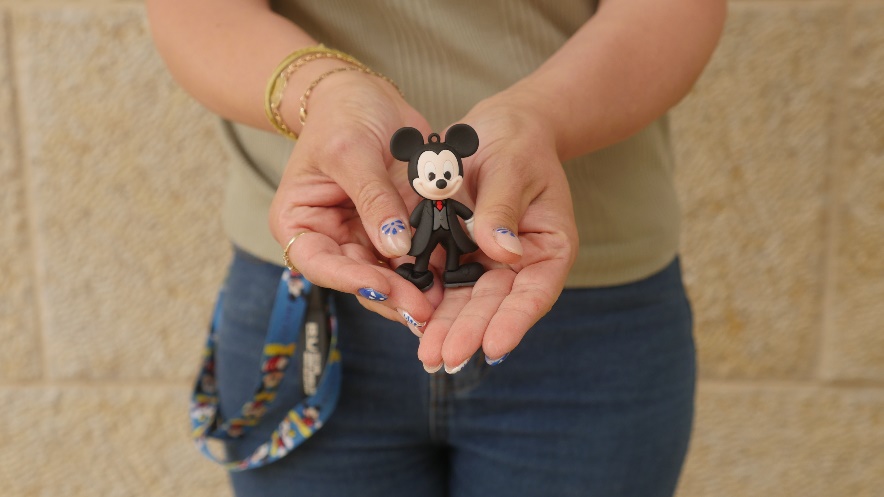
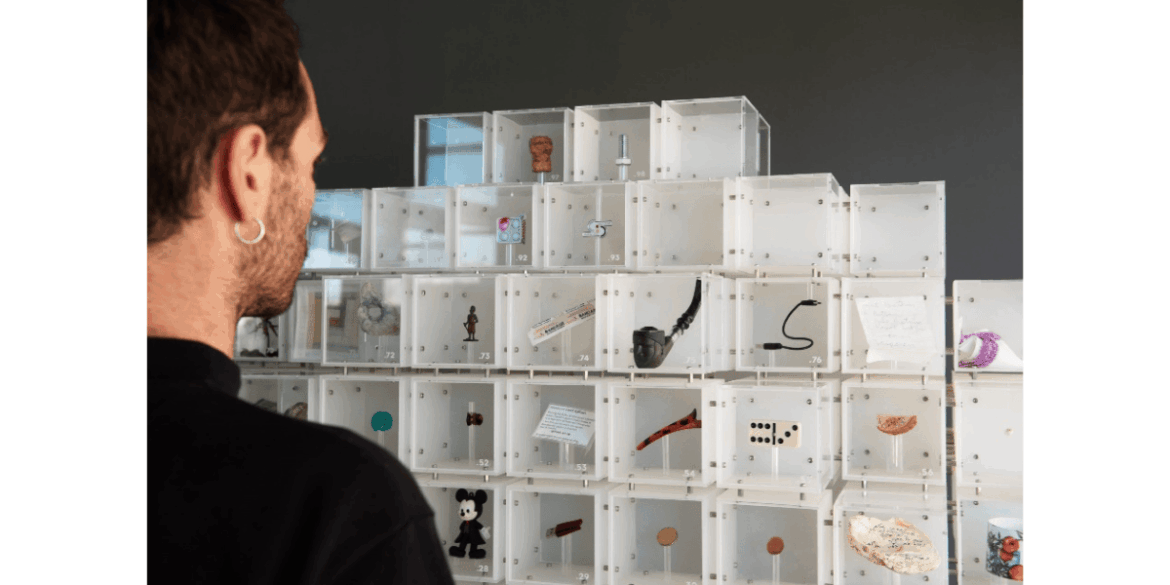
At the entrance to the Edmond and Lily Safra Center for Brain Sciences (ELSC), a white, transparent installation resembling a human brain has been placed. Constructed from dozens of small cubes, each cube contains a personal creation expressing hope. Together, they form a single installation titled “100 Hands.”
The project was conceived earlier this year, when the Center’s team sought a way to mark the centennial celebrations of the Hebrew University of Jerusalem. The decision was made to turn the public into an integral part of the artwork itself. In collaboration with the University’s curator, Dr Michal Mor, and artists Yuval Eily and Ali Ben-Arieh, graduates of the Bezalel Academy of Arts and Design, the concept for a community-based installation was developed.
An open call invited women, men, and children from across Israeli society to participate in the project. The call was publicized both on social media and through community centers, with the aim of reaching diverse audiences. During two concentrated events, participants ranging from senior citizens to children and members of the academic community took part in the creative process.
Each participant received a single transparent cube and was asked to embed within it a personal element representing “hope.” The cubes were later assembled into a sculptural object that simplifies the structure of the human brain—layers of thought, memory, imagination, and emotion. Alongside the installation, a screen displays documentation of the hands holding the cubes and close-up views of the selected elements.
The final result, unveiled at the Center in early December, is a quiet yet powerful installation that bridges science and art, research and community—one object composed of one hundred individual perspectives.
Photos courtesy of: Yuval Ayali and Eli Ben Arye
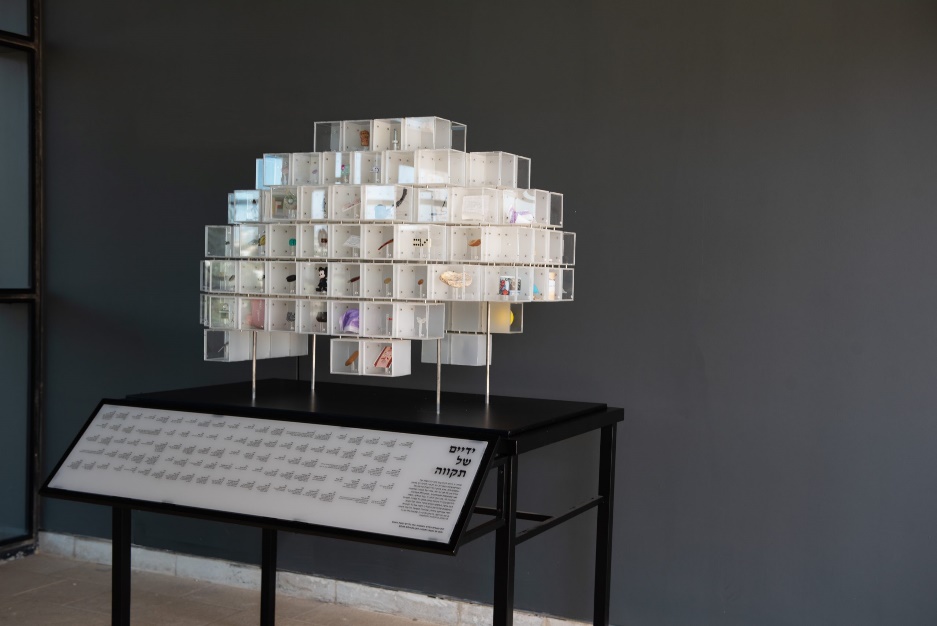
Photo courtesy of: Adi Tamam/ELSC