
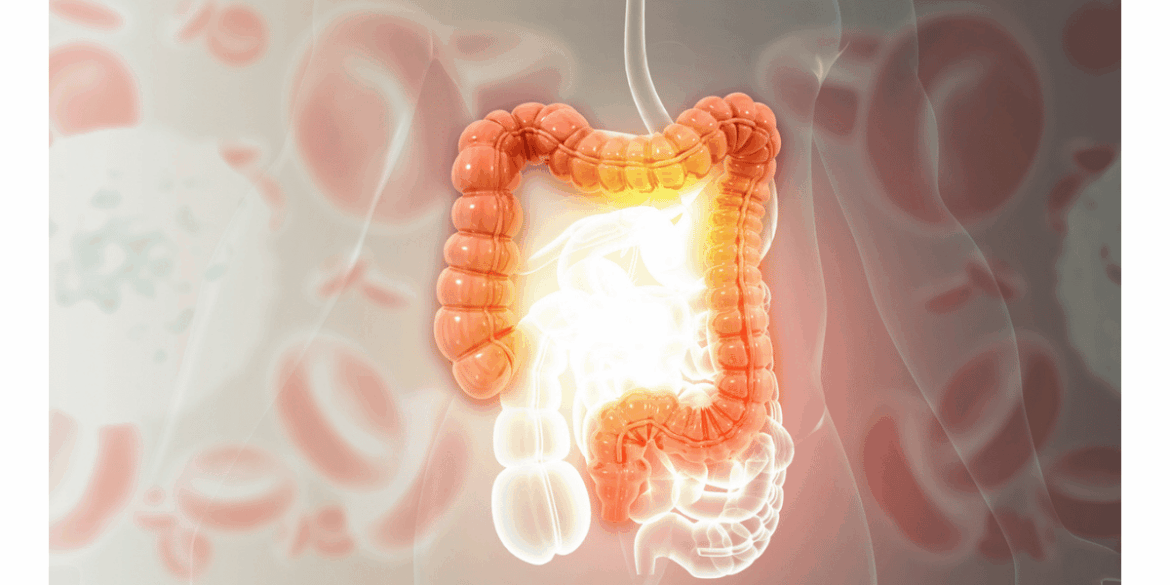
Inflammatory bowel disease (IBD), affecting an estimated 6–8 million people worldwide, may soon be monitored with a simple stool test instead of invasive procedures. Researchers have demonstrated that human DNA in fecal matter, previously ignored as biological noise, provides a clear map of activity in Inflammatory Bowel Disease. By analyzing the origin of this DNA through methylation profiling, the team found that neutrophil levels in stool accurately reflect the severity of gut inflammation in both children and adults. This dual approach of monitoring both host and microbiome data offers a non-invasive way to track disease flares and treatment efficacy over time.
Researchers from the Hebrew University of Jerusalem and Shaare Zedek Medical Center, led by Prof Moran Yassour, Prof Eyal Shteyer and Prof Yuval Dor, have discovered that human DNA in stool, once dismissed as biological “noise”, can serve as a powerful, non-invasive tool for tracking disease activity in IBD.
The study, published in Microbiome, shows that this overlooked DNA provides a real-time window into gut inflammation. By identifying where the DNA originates, the researchers found that immune cells called neutrophils leave a strong signal in stool that closely reflects disease severity in both children and adults.
Today, many patients with IBD, including Crohn’s disease and ulcerative colitis, must undergo repeated colonoscopies to monitor inflammation. This new approach suggests that a simple stool test could help track flare-ups and treatment response over time, reducing reliance on invasive procedures.
“For too long, the human DNA found in stool samples was treated as biological ‘noise’ that we filtered out to focus on microbial data,” said Prof Moran Yassour, from Hebrew University. “Our findings show that this DNA contains valuable, unappreciated information, reflecting the immune system’s activity in real time. By analyzing both the human and microbial components together, we can gain a much clearer picture of what is happening in the gut.”
Using a method that identifies the origin of DNA fragments, the team showed that neutrophil DNA dominates the human DNA found in stool samples from IBD patients, in contrast to previous assumptions that the colon epithelial DNA will be present at high levels. Neutrophils are immune cells that migrate to the gut in response to inflammation.
The researchers found that levels of neutrophil DNA strongly correlate with established clinical markers, such as fecal calprotectin, reinforcing its value as a reliable indicator of disease activity. Furthermore, calprotectin assays have their own detection limits, hindering their efficacy in most severe cases.
Key Findings
- New Biomarker: Neutrophil DNA levels accurately reflect disease severity and flare-ups in IBD patients.
- Improved Metric: A newly developed measure, the Neutrophil-to-Epithelial Ratio (NER), more effectively distinguishes between remission and active disease.
- Predictive Power: Combining human DNA signals with microbiome data, machine learning models were able to predict IBD and differentiate between Crohn’s disease and ulcerative colitis.
- Across Ages: Results were consistent in both pediatric patients in Israel and adult patients in the Netherlands.
This dual analysis of human and microbial DNA opens the door to a new generation of non-invasive diagnostic tools. By capturing both the body’s immune response and the microbiome’s composition, clinicians may be able to monitor disease progression more accurately and adjust treatments earlier.
The researchers hope this approach will lead to routine stool-based monitoring, improving care and quality of life for millions of people living with IBD.
The study was supported by the Helmsley Charitable Trust and conducted in collaboration with the Hebrew University Faculty of Medicine and the Shaare Zedek Pediatric Gastroenterology Institute.
The research paper titled “Human DNA levels in feces reflect gut inflammation and associate with presence of gut species in IBD patients across the age spectrum” is now available in Microbiome and can be accessed at https://link.springer.com/article/10.1186/s40168-026-02344-6#Sec18
Researchers:
Chiara Mazzoni, Bracha‑Lea Ochana, Esther Orlanski‑Meyer, Ami Ben Ya’acov, Gili Focht, Esty Harpenas, Shimrit Shmorak, Oren Ledder, Raffi Lev‑Tzion, Ruth Shemer, Eyal Shteyer, Yuval Dor and Moran Yassour
Institutions:
- Microbiology and Molecular Genetics Department, Institute for Medical Research Israel-Canada, Hebrew University of Jerusalem, Jerusalem, Israel.
- Developmental Biology and Cancer Research Department, Institute for Medical Research Israel-Canada, Hebrew University of Jerusalem, Jerusalem, Israel.
- Juliet Keidan Institute of Pediatric Gastroenterology Hepatology and Nutrition, Shaare Zedek Medical Center, The Eisenberg R&D Authority, Jerusalem, Israel.
- Faculty of Medicine, Hebrew University of Jerusalem, Jerusalem, Israel.
- The Rachel and Selim Benin, School of Computer Science and Engineering, Hebrew University of Jerusalem, Jerusalem, Israel.
Funding:
This research was funded by a grant from the Helmsley Charitable Trust (to YD, ES and MY). Research in YD lab is supported by grants from the Israel Science Foundation, Israel’s Ministry of Science and Technology (MOST), Israel’s Innovation authority, the Waldholtz / Pakula family, the Robert M. and Marilyn Sternberg Family Charitable Foundation, Horizon Europe (PANCAID consortium) and NCI (2U01CA210171-06). MY holds the Rosalind, Paul and Robin Berlin Faculty Development Chair in Perinatal Research. YD holds the Walter and Greta Stiel Chair and Research grant in Heart studies.