
A new study identifies vgll3 as a key gene that promotes rapid growth and early reproduction while increasing the risk of aging and cancer later in life. The findings provide rare experimental evidence for the theory that evolution favors early-life advantages even at the expense of long-term health. Researchers say the discovery could open new paths for understanding, and potentially separating, the biological links between development, aging, and disease.
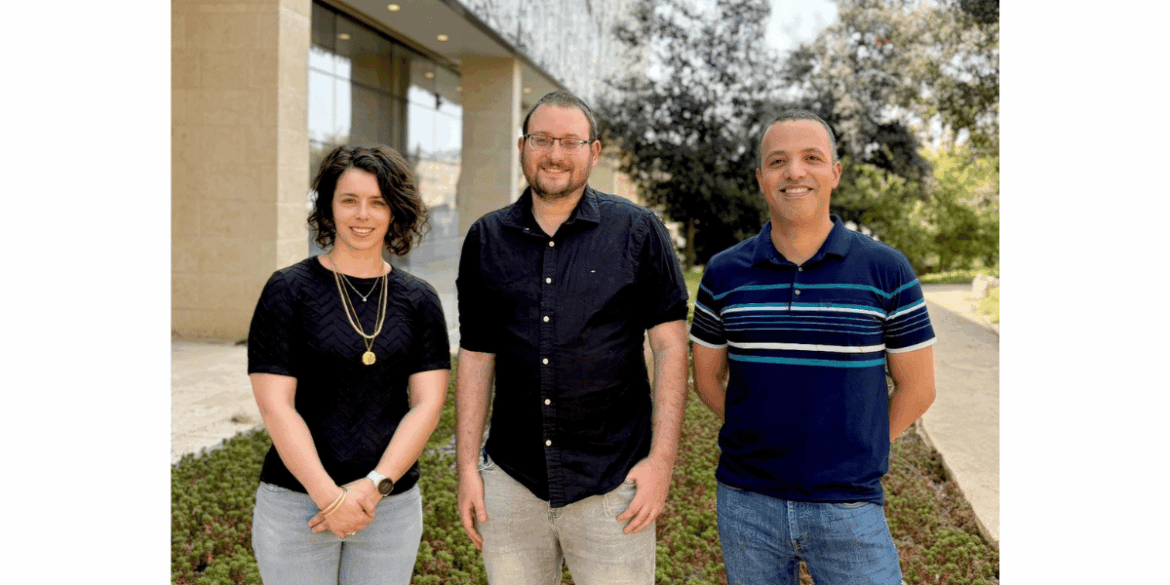
Title image: This project was led by (from left to right): Dr. Marva Bergman, Dr. Eitan Moses, and Prof. Itamar Harel Credit: Tehila Atlan
Researchers have identified a gene that directly links early-life growth and reproductive success with accelerated aging and increased cancer risk later in life, offering new insight into a longstanding theory in evolutionary biology.
Now, an international team led by Dr Eitan Moses, Dr Marva Bergman, and Prof Itamar Harel at Hebrew University, in collaboration with Prof Nabieh Ayoub (Technion) and Prof Alexei A. Maklakov (University of East Anglia), provides experimental evidence for the theory of antagonistic pleiotropy, the idea that certain genes can provide advantages early in life while contributing to disease and decline in old age.
While widely accepted in theory, scientists have struggled to identify specific genes responsible for such trade-offs in vertebrates. Using the African turquoise killifish, a short-lived species recently pioneered by Harel and colleagues for genetic aging research, the team focused on the gene vgll3, which has been previously linked to the timing of human puberty and maturation in other species, particularly Atlantic salmon.
By modifying this gene using CRISPR technology, the researchers observed clear effects. Fish with altered vgll3 grew faster and reached sexual maturity earlier, traits that could offer a reproductive advantage in natural environments.
However, these benefits came with significant long-term costs. The same fish showed reduced lifespans and a higher incidence of age-related tumors, including melanoma-like cancers.
“We have effectively caught evolution in the act of making a trade-off. For years, we’ve asked why our bodies can’t just maintain themselves indefinitely. This gene gives us a direct answer: nature doesn’t prioritize longevity; it prioritizes continuity. We are built to sprint, not to marathon,” said Dr Harel.
Further analysis showed that the gene influences key biological processes, including cell division,
stem cell activity, and DNA repair. Increased cellular activity may help explain both the rapid
development observed in younger fish and the accumulation of damage that leads to disease in older individuals.
The researchers also developed a new immunodeficient killifish model, enabling them to transplant and study tumor cells in ways not previously possible in this system.
“What’s fascinating—and slightly terrifying—is that the cancer we see in these fish isn’t a random accident. It’s the direct shadow of their youthful vitality. The same machinery that drives a cell to build a young body is hijacking the system to build a tumor in the old one. If we can understand this mechanism, we might finally learn how to decouple healthy growth from the disease of aging,” Dr Harel added.
Because vgll3 is conserved in humans, the findings may have broader implications for understanding human development, aging, and age-related diseases. While previous association studies have linked the gene to puberty timing and hormone levels, functional data were missing until now.
The discovery could contribute to future efforts in cancer prevention and research aimed at extending healthy lifespan. Researchers say the next step will be to explore whether it is possible to separate the gene’s beneficial early-life effects from its harmful consequences later in life.
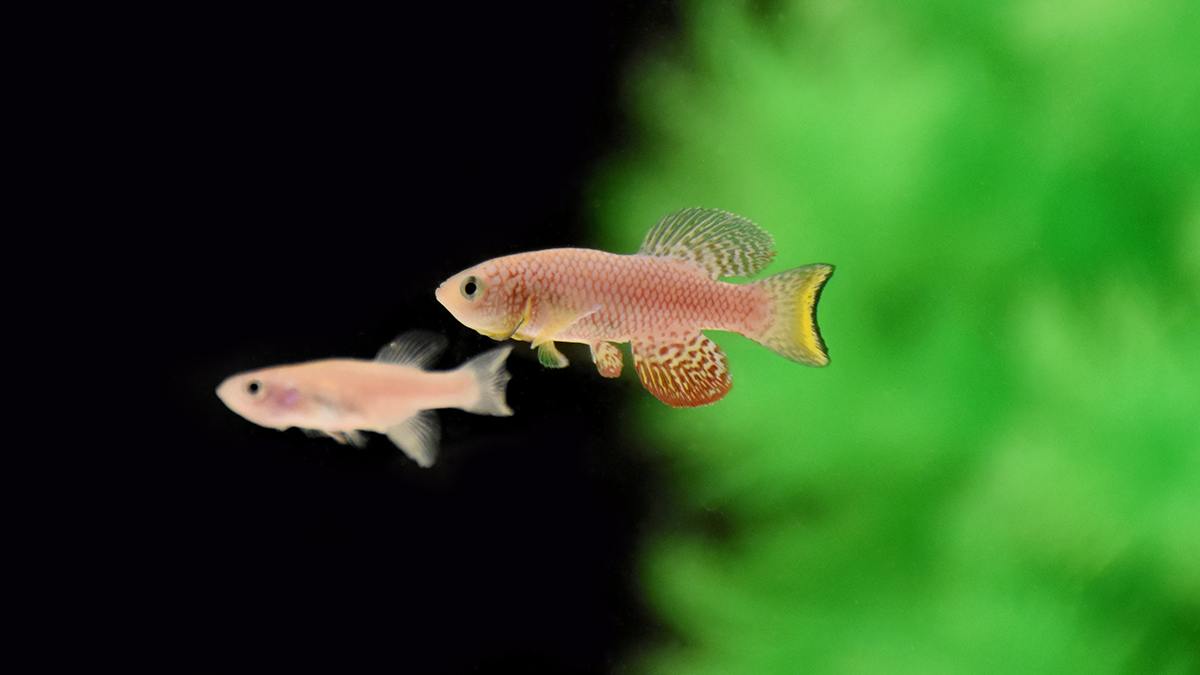
Title: Comparison of female and male killifish Description: The killifish is an emerging model for investigating the genetic architecture of aging and age-related pathologies, which often exhibit sex-specific patterns between females (left) and males (right).Credit: Itamar Harel
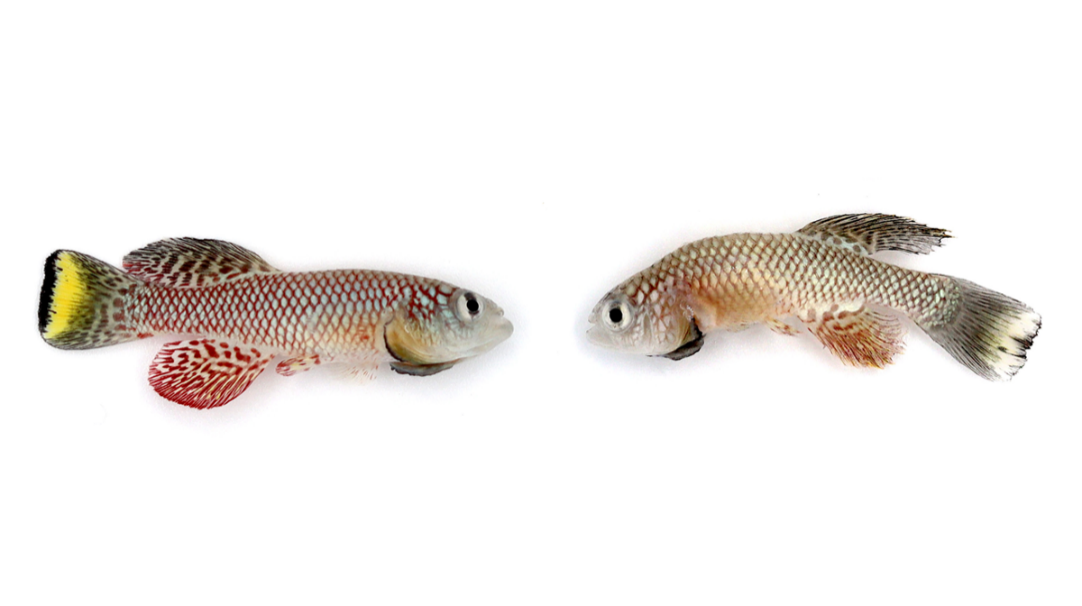
Title: Young and old male killifish Description: A 3-month-old African turquoise killifish, left, and a 5-month-old killifish, right, show aging much like that in humans. Credit: Itamar Harel
The research paper titled “An Antagonistically Pleiotropic Gene Regulates Vertebrate Growth, Maturity, and Lifespan” is now available in Nature Communications and can be accessed at DOI:10.1038/s41467-026-72381-0.
Researchers:Eitan Moses, Marva Bergman, Tehila Atlan, Elizabeth M.L. Duxbury, Roman Franěk, Omer Ben Dor, Henrik von Chrzanowski, Enas R. Abu-Zhayia, Nabieh Ayoub, Shay Kinreich, Ido Ben-Ami, Alexei A. Maklakov, and Itamar Harel
Institutions:
- Department of Genetics, the Silberman Institute, the Hebrew University of Jerusalem, Givat Ram, Jerusalem, 91904, Israel.
- Department of Obstetrics & Gynecology, Shaare Zedek Medical Center and Faculty of Medicine, The Hebrew University of Jerusalem, Jerusalem, Israel.
- School of Biological Sciences, University of East Anglia, Norwich, UK
- Department of Zoology, University of Cambridge, Cambridge, UK
- University of South Bohemia in Ceske Budejovice, South Bohemian Research Center of Aquaculture and Biodiversity of Hydrocenoses, Zatisi 728/II, 389 25 Vodnany, Czech Republic.
- Department of Biology, Technion-Israel Institute of Technology, Haifa 3200003, Israel