
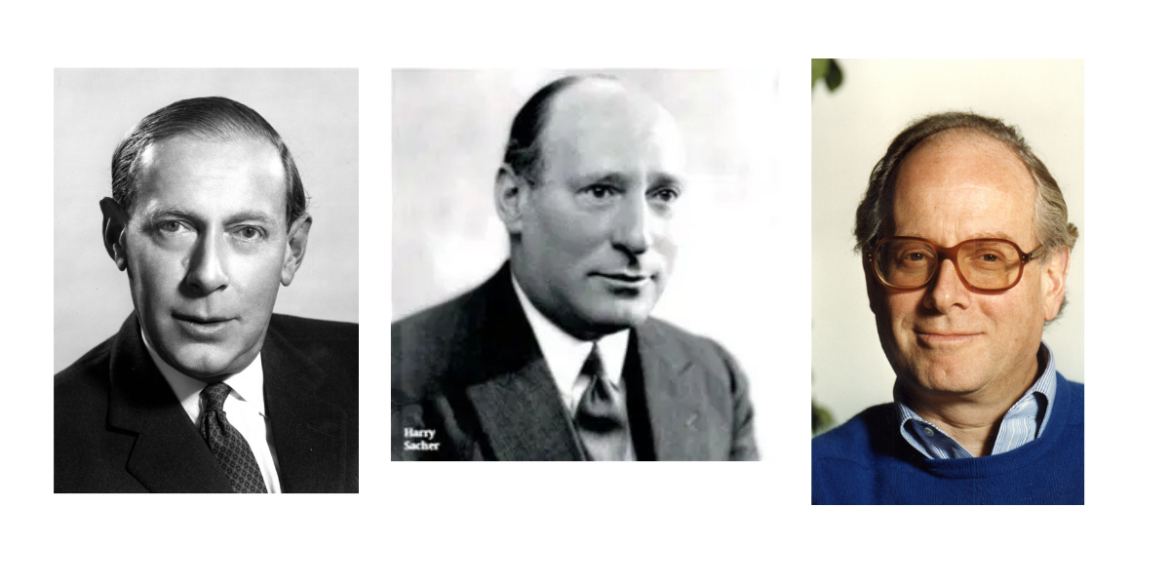
The story of the Sacher family is, at its heart, a story of one man’s early faith in an extraordinary idea.
Harry Sacher was not simply a supporter of the Hebrew University; Before there was a State of Israel, he was among its ideators and founders, helping to give substance to a bold vision at a time when the institution itself was still only beginning to take shape. His commitment helped anchor the University in those formative years, when ambition, idealism and determination were needed in equal measure.
A passionate Zionist, lawyer and public intellectual, Harry understood the Hebrew University as more than a place of learning. For him, it was part of the national and cultural renewal of Jewish life, and a vital institution for the future of the Jewish people. In the 1920s, he established a legal practice in Jerusalem, bringing that conviction into practical life and helping to build the fabric of the city as well as the University’s wider intellectual world.
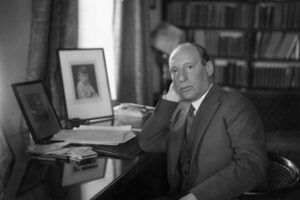
Though tragedy later brought him back to the UK after the death of his youngest son, Daniel, his bond with the Hebrew University never weakened. He remained closely involved, and his commitment was matched by that of his wife, Miriam Sacher (Nee Marks) whose work with WIZO reflected a shared sense of communal responsibility and service. Together, they helped sustain the ideals that had first drawn Harry to the University’s founding.
That legacy did not stop with Harry. It passed into the hands of Michael Sacher, then John, and later his brother, Jeremy – each generation carrying the family’s connection in its own way. What began as founding support became a lineage of involvement, shaped by memory, duty and an enduring respect for the University’s mission.
The family’s commitment found further expression through the Harry and Michael Sacher Legal Institute at the Hebrew University, established in 1959 by Michael’s children in tribute to the family’s history. The Institute serves as a prominent research arm of the Faculty of Law, as well as a publishing house (the leading in Israel) for legal academic publications.
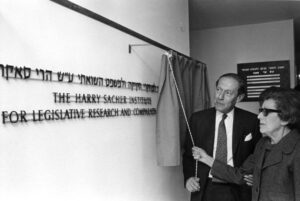
The Institute and the Sacher Legal Centre have become important symbols of how a founder’s vision can live on in scholarship, legal thought and public service. In today’s complex climate, their work feels especially resonant, reminding us that institutions endure because people continue to believe in them.
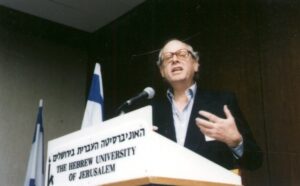
For Jeremy, that belief has deepened in recent years. What began as an act of loyalty to his family’s past has been renewed by a clearer sense of the Hebrew University’s relevance to Israeli society today. In supporting a university that fosters diversity, inclusion and democratic values, he is not only honouring his grandfather’s founding role, but also helping carry forward the very idea that Harry Sacher helped bring into being.
The Sacher family’s story is therefore more than one of remembrance. It is a story of foundation and continuity, of a far-reaching vision translated into action and institution, and of a legacy that began with Harry’s conviction that the Hebrew University should exist — and has continued, generation after generation, because that conviction never lost its power.