
Your intestine completely rebuilds its inner lining every few days—one of the fastest renewal processes in the human body. Scientists have now discovered that this extraordinary feat is accompanied by a hidden network of specialized mesenchymal support cells working behind the scenes, revealing an unexpected level of organization inside the gut and offering new clues that may eventually inform approaches to intestinal injury and inflammatory bowel disease.
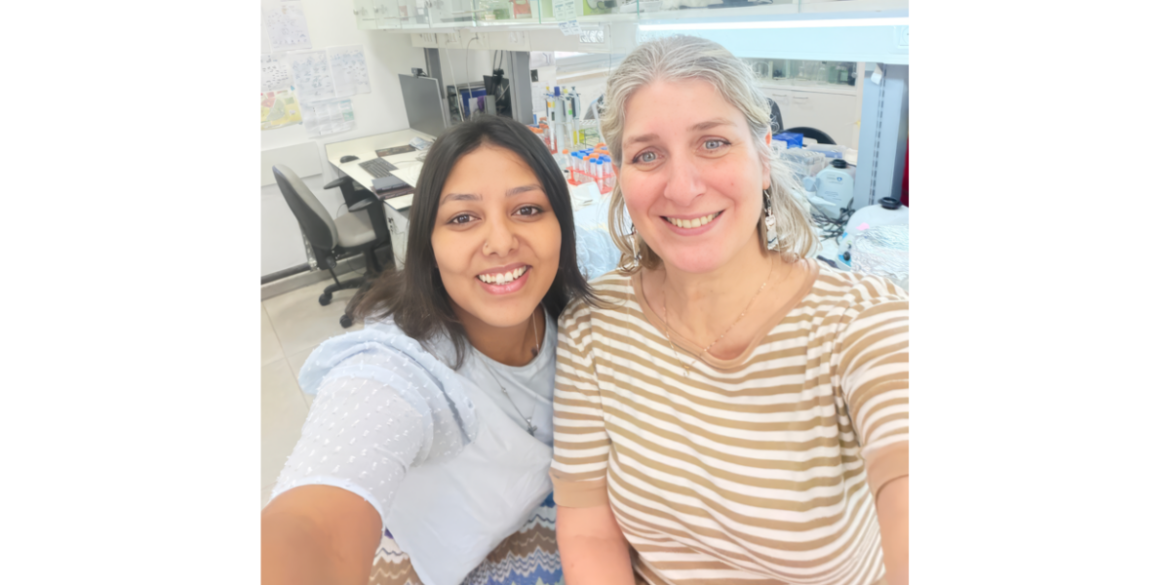
Title image: Left to right: Amal Gharbi and Michal Shoshkes-Carmel | Credit: Amal Gharbi
Researchers have uncovered an unexpected level of organization within the cells that support the intestine, revealing four distinct populations of specialized mesenchymal support cells that work together to maintain one of the body’s fastest-renewing tissues.
The study, led by PhD student Amal Gharbi and Dr. Michal Shoshkes-Carmel of Hebrew University and published in Cellular and Molecular Gastroenterology and Hepatology (CMGH), focuses on specialized Foxl1-lineage cells that form a thin network just beneath the intestinal lining. Scientists have known these cells are essential for supporting intestinal stem cells, but until now they were thought to function as a single group.
Instead, the researchers discovered that the network is made up of four distinct cell populations, each occupying its own location along the intestine and carrying a unique genetic program.
“Our findings show that these cells are far more specialized than we previously appreciated,” said Dr. Michal Shoshkes-Carmel. “Each subtype appears to provide a different set of signals depending on its location, helping coordinate stem cell activity, tissue renewal, immune responses and the overall organization of the intestine.”
The intestine replaces its entire lining every few days, a remarkable process driven by stem cells hidden inside microscopic pockets called crypts. As new cells are produced, they migrate upward toward finger-like projections known as villi, where they mature before being shed. Until now, scientists had only a limited understanding of how this continuous cycle remained so precisely coordinated.
Using single-cell RNA sequencing together with advanced imaging techniques, the researchers created the first detailed atlas of Foxl1-lineage cells across the crypt-villus axis. They found that each subtype produces its own combination of signaling molecules, revealing that different regions of the intestine create distinct local environments that instruct neighboring cells how to behave.
“Instead of finding one type of support cell doing many jobs, we discovered a whole community of specialized cells,” said Amal Gharbi, first author of the study. “Each group occupies its own neighborhood in the intestine and appears to communicate with nearby cells in a different way. It’s like uncovering an entirely new layer of organization that was hidden in plain sight.”
The researchers identified unique genetic signatures for each of the four cell populations, along with distinct signaling molecules that influence stem cells, neighboring intestinal cells, blood vessels and the immune system. The findings also uncovered previously unknown communication pathways between the intestinal lining and the underlying support cells, pointing to new mechanisms that help maintain healthy tissue and coordinate local immune responses.
For example, cells surrounding the crypt were rich in signals known to support intestinal stem cells, while cells higher up the villi were associated with immune regulation, tissue architecture, nutrient sensing and metabolic responses. Together, these specialized cells form a coordinated support network that helps organize the intestine from bottom to top.
The findings provide researchers with a new framework for understanding how the intestine maintains itself throughout life and may eventually guide new strategies for treating intestinal injury, inflammatory bowel disease, and other disorders in which tissue repair is impaired.
The team’s next step is to determine exactly what each of the four newly discovered cell populations does by selectively switching them off or altering their activity in experimental models. Future studies using targeted genetic approaches and live-cell imaging will allow researchers to watch these cells in action and uncover how they contribute to regeneration, stem cell support, immune signaling, epithelial renewal, and tissue repair.
Funding
Israel Science Foundation (grant #1997/19, grant #2908/19 MS-C); The National Natural Science Foundation of China (NSFC) and the Israel Science Foundation (joint grant #3436/20, MS-C, BS), Shanghai Jiao Tong University-The Hebrew University of Jerusalem Joint Seed Funding (HC); HUJI International PhD Talent Scholarship and Isadore Sharp Einstein scholarship for IMRIC outstanding PhD students to A.G; Carole and Andrew Harper Diversity Program to Excellent Palestinian PhD Scholarship to A.J.
Media Contacts
Dr. Michal Shoshkes-Carmel, Faculty of Medicine, Hebrew University of Jerusalem
Tel: +972 58-700-2681| Email: michal.shoshkes@mail.huji.ac.il
Research Paper
Gharbi, A. et al. “Single-cell transcriptome profiles of Foxl1-lineage cells along the intestinal crypt-villus axis.” Cellular and Molecular Gastroenterology and Hepatology (CMGH). 2026. DOI: 10.1016/j.jcmgh.2026.101849
Authors:
Amal Gharbi, Noa Corem, Sharona Elgavish, Inbar Plachkes, Abrar Jamous, Marco Canella, Moriya Shmuel, Hadar Horowitz, Jianmei Tan, Hongqian Chen, Bing Su, Mahmud Abu-Gazala, Noam Shussman and Michal Shoshkes-Carmel
Affiliations:
- Department of Developmental Biology and Cancer Research, Institute for Medical Research Israel-Canada, Hebrew University Medical School, Jerusalem, Israel.
- Info-CORE, Bioinformatics Unit of the I-CORE at the Hebrew University of Jerusalem, Jerusalem, Israel.
- Shanghai Institute of Immunology, Department of Immunology and Microbiology, Shanghai Jiao Tong University School of Medicine.
- Department of General Surgery, Hadassah Medical Centre and Faculty of Medicine, Hebrew University of Jerusalem, Jerusalem, Israel.