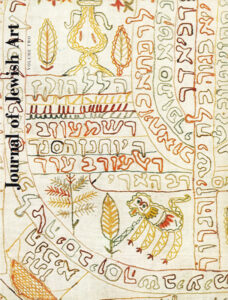
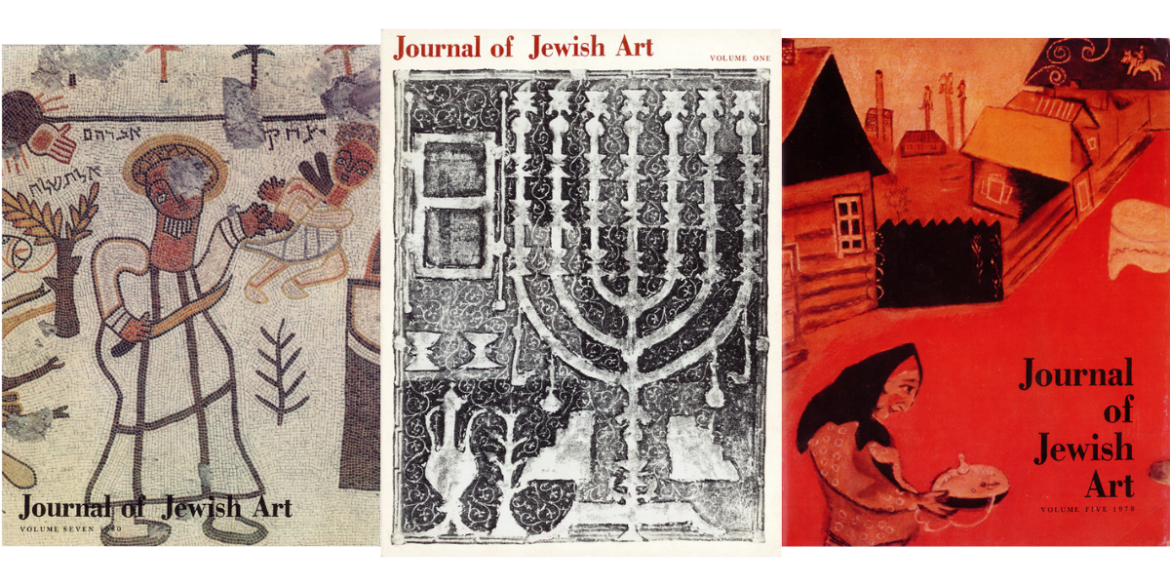
All articles from the journal’s 24 volumes have been digitized, OCR-processed, and opened to researchers, students, and readers around the world.
The Hebrew University of Jerusalem’s Center for Jewish Art has made the full run of the Journal of Jewish Art, later titled Jewish Art, available online, opening one of the field’s most important scholarly resources to global access.
The newly digitized collection includes all articles published across the journal’s 24 volumes. The articles have been scanned, OCR-processed, and made available for download through the Center for Jewish Art website: https://cja.huji.ac.il/browser.php?mode=ja.
Founded in 1974 by Maurice Spertus and Professor Bezalel Narkiss, the Journal of Jewish Art was among the first scholarly platforms devoted to defining and studying Jewish art as a field in its own right. Later renamed Jewish Art, the journal examined Jewish visual culture in dialogue with Christian and Islamic art, as well as with the local styles, traditions, and cultures in which Jewish communities lived and created. Most articles were published in English, alongside selected contributions in other European languages, making the journal an international meeting place for scholarship on Jewish art and material culture.
Over the years, the journal published work by many leading scholars in the field, including Bezalel Narkiss, Gabrielle Sed-Rajna, Rachel Wischnitzer, Ziva Amishai-Maisels, Shalom Sabar, Ruth Mellinkoff, Herbert L. Kessler, Vivian B. Mann, Bianca Kühnel, and others. Its volumes explored subjects ranging from illuminated Hebrew manuscripts, synagogue architecture, ritual objects, and Jewish iconography to modern Jewish artists, Sephardi visual culture, Eastern European Jewish heritage, and representations of Jerusalem.
“This project renews access to a foundational chapter in the study of Jewish visual culture,” said Dr Vladimir Levin, Director of the Center for Jewish Art at the Hebrew University of Jerusalem. “For decades, these volumes helped shape the academic conversation around Jewish art. By making them freely available online, we are ensuring that scholars, students, educators, and the wider public can rediscover this material and continue building on it.”
The digitization of the journal reflects the Center for Jewish Art’s broader mission to document, preserve, and make accessible Jewish visual and material culture from around the world. Established in 1979 by Professor Bezalel Narkiss, the Center has documented Jewish art objects in hundreds of museums, libraries, private collections, and synagogues across dozens of countries. Its archives and collections form one of the most comprehensive bodies of information on Jewish art in existence, much of it accessible through the Bezalel Narkiss Index of Jewish Art and Material Culture.
The online release comes as Jewish communities around the world prepare for the Jewish New Year, offering scholars and readers a meaningful opportunity to revisit, preserve, and share a rich cultural legacy.
Access the journal here: https://cja.huji.ac.il/browser.php?mode=ja