
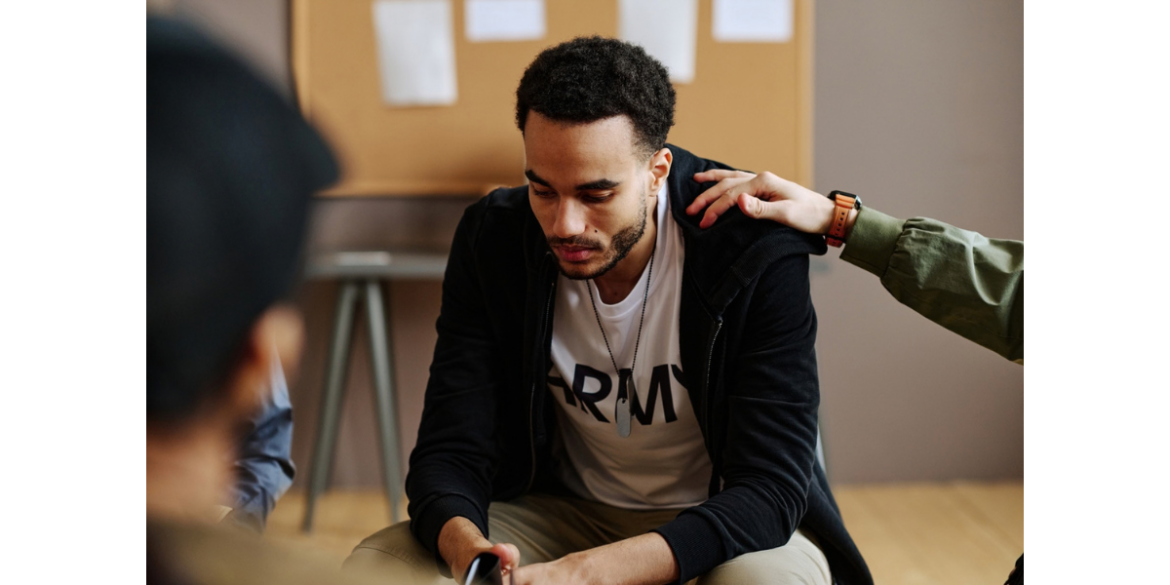
Three years after October 7, a new study reveals that the psychological toll of war on combat soldiers is driven not just by battlefield exposure, but by a combination of personal insecurities and political disillusionment. When the foundations soldiers rely on for emotional security—including close relationships and trust in their political worldview—are shaken, they become more vulnerable to severe post-traumatic stress and depression. Many turn to substance abuse and behavioral addictions as a way to cope with the overwhelming distress of combat.
A new study suggests that the psychological damage of war is shaped not only by combat itself, but also by the political and emotional realities soldiers return home to.
Researchers studying Israeli reserve soldiers who served during the Swords of Iron war found that combat exposure was significantly more likely to lead to post-traumatic stress, depression, and addictive behaviors among soldiers experiencing attachment anxiety in personal relationships or political disillusionment. The findings suggest that when a soldier’s sense of personal stability and trust in society breaks down, the mental toll of war becomes far more severe.
The study, led by Dr Uri Lifshin of the Hebrew University of Jerusalem and the Israel Center for Addiction and Mental Health, surveyed 357 male reserve soldiers deployed during the early months of the war.
“We often think of trauma solely as a product of what happens on the battlefield,” said Dr Lifshin. “But our findings show that when soldiers feel insecure or alienated by the social and political realities around them, they become significantly more vulnerable to severe psychological distress.”
Researchers found that soldiers with high attachment anxiety, characterized by deep fears surrounding self-worth, rejection, and emotional security, experienced substantially higher rates of post-traumatic stress and depression following combat exposure.
The study also identified a significant political dimension. Soldiers who were exposed to life-threating combat situations, reported high attachment anxiety, and voted for the left-wing opposition political party, reported greater psychological distress than those whose beliefs aligned more closely with the right-wing governing coalition. According to the researchers, this sense of ideological instability may weaken the psychological frameworks people rely on to cope with fear, uncertainty, and trauma.
As these emotional and ideological coping systems deteriorate, some soldiers may turn to unhealthy forms of escape. The study found indirect links between combat exposure, emotional insecurity, political misalignment, and increased risks of problematic alcohol use, cannabis use, gambling, pornography consumption, and gaming behaviors.
According to the researchers, these addictive behaviors may function as forms of self-medication aimed at numbing intrusive memories, anxiety, and emotional distress associated with combat experiences.
The findings bridge trauma research, existential psychology, and addiction studies, suggesting that effective treatment for veterans may require addressing not only battlefield experiences, but also the broader social and political environments veterans return to after war.
The researchers say the findings may have implications far beyond Israel, particularly in societies experiencing political polarization, institutional distrust, or prolonged conflict.
The research paper titled “Anxiety-buffer disruption in combat soldiers: the contributions of exposure to combat-related threats, attachment anxiety, and ideological threat to mental health and addiction” is now available in Anxiety, Stress, & Coping and can be accessed at https://doi.org/10.1080/10615806.2026.2669926.
Researchers:
Uri Lifshin, Vera Skvirsky, Merav Vider, Ariel Kor, Shaul Lev-Ran and Mario Mikulince
Institutions:
- Department of Psychology and Israel Center for Addiction and Mental Health (ICAMH), The Hebrew University of Jerusalem, Jerusalem, Israel
- Faculty of Medicine and Israel Center for Addiction and Mental Health, The Hebrew University of Jerusalem, Jerusalem, Israel
- Lev Hasharon Medical Center, Netanya, Israel
- Sackler Faculty of Medicine, Tel Aviv University, Tel Aviv, Israel