A Landmark gift by the Lavin Family, through its foundation, The Sheba Foundation, will launch the Hebrew University of Jerusalem Center for Advanced Medical Education, a new model designed to train more physicians without compromising excellence, preserve the human foundations of medicine, and prepare doctors to lead in an AI-enabled world.
A landmark $30 million gift from the family foundation of philanthropist Steven H. Lavin will establish the Hebrew University of Jerusalem Center for Advanced Medical Education, an ambitious initiative to create a fundamentally new model for physician training.
The Center will address one of healthcare’s defining challenges: how to train significantly more physicians while strengthening the quality of their preparation and preserving the clinical judgment, ethical responsibility, communication, and mentorship on which excellent care depends. It will also prepare future physicians to lead medicine in an era transformed by artificial intelligence.
The Center’s vision is to help medical schools in Israel and around the world train more doctors to a higher standard, while keeping clinical judgment and compassionate care at the heart of medical education.
The Lavin family’s gift places them at the forefront of an effort with the potential to reshape how physicians are educated in Israel and internationally.
“Hebrew University is the foundation, the rock for the future of the State of Israel, and that HUJI does not do so in isolation, but rather through inclusion.
We are honored and privileged to support the Center as a part of the program for Israel and the Jewish people, that we have developed. IMAGINE what can be achieved through our program to BUILD INVEST in a BETTER ISRAEL, through engagement in its OVERALL ECONOMY— including food security and at affordable prices; MEDICAL services, with the Center at Hebrew University being the foundation of a broader effort throughout Israel, including, Sheba Medical Center and Adi Negev Rehabilitation Center and Hospital; EDUCATION— with our partners the Jewish Federation of Metropolitan Chicago and the Rothschild Sanibal program for our Druze brothers and sisters, and full undergraduate scholarships at Hebrew University, The Technion, Ben Gurion University of the Negev and managed by Tel Aviv University, through the Sylvia Lavin Israel Scholarship Program for students coming from the U.S and Canada to learn and build relationships; and HOUSING— in conjunction with the Jewish Agency,” said Steven H. Lavin.
Israel urgently needs more physicians and healthcare professionals, but traditional training models cannot simply grow without placing greater strain on the expert clinicians who teach, observe, assess, and mentor students. The Center will overcome that constraint by using technology to scale the structured elements of education while protecting physician-educators’ time for the work only they can do: coaching, clinical judgment, individualized feedback, and professional formation.
A new operating model for medical education
The Center will bring learning, practice, and assessment into a coordinated training model. Students will prepare through digital learning, practice clinical skills in simulations, and receive ongoing feedback to identify where they need more support. Assessments will track their ability to apply knowledge, perform practical skills, and exercise clinical judgment.
By using technology to support preparation, practice, and progress tracking, the model aims to give physician-educators more time for clinical coaching, individualized feedback, and teaching patient care. This approach is designed to make it possible to train more students while maintaining close attention to each student’s development.
The model is already taking shape in Hebrew University’s redesigned pediatric clinical rotation, where medical students train in the care of children. Launching in October 2026, the pilot will combine simulation, digital preparation, team-based learning, and physician coaching, and will guide expansion across other clinical rotations.
“The Lavin Family’s extraordinary generosity gives Hebrew University the opportunity to do something truly transformative: create a new model for medical education that responds to an urgent national need while setting a standard for the world,” said Prof Tamir Sheafer, President of the Hebrew University of Jerusalem. “This Center embodies our deepest commitments as a university, to intellectual leadership, service to society, and innovation that keeps humanity at its core. We are profoundly grateful to the Lavin Family foundation for sharing this vision and making it possible.”
Preparing physicians to lead AI-mediated care
The Center will use AI-powered learning, simulation, and analytics to personalize training, provide more opportunities to practice, and identify students who need support sooner.
It will also prepare physicians for a new reality in which clinical decisions increasingly involve the doctor, the patient, and AI. Students will learn to question AI recommendations, recognize uncertainty, apply their own clinical judgment, and clearly explain decisions to patients.
The goal is to develop physicians who can use AI with confidence while remaining independent, accountable, and deeply human.
Meeting an urgent need in Israel and beyond
This gift comes at a critical time. Israel is expected to have only 3.0 doctors per 1,000 people by 2035. The country must train more physicians without lowering standards. The Center’s model aims to double training capacity while improving quality and easing the administrative burden on medical educators.
The Center will work with leading medical schools in the United States, Canada, and the United Kingdom to test and refine the model. Over time, these partnerships are expected to form a global consortium dedicated to advancing medical education.
By proving that the model works across different institutions and healthcare systems, Hebrew University can help medical schools around the world train more highly qualified physicians, extending the impact of Lavin’s gift far beyond Israel.
“The future of medicine requires more than teaching students to use new technologies. It requires us to rethink how physicians acquire knowledge, develop clinical judgment, demonstrate competence, and learn to place the needs of the patient first,” said Prof Eli Pikarsky, Dean of the Faculty of Medicine at the Hebrew University of Jerusalem. “By combining advanced technology with rigorous assessment, expert mentorship, and human-centered care, this Center will allow us to educate more physicians to a higher and more consistent standard, and to share what we learn with medical schools around the world.”
Through this $30 million gift, the Lavin Family’s foundation is enabling a new model for medical education at Hebrew University, designed to train more physicians, raise standards, and prepare doctors to lead in an AI-enabled future while preserving the human core of medicine.
The gift builds on Lavin’s longstanding support of Hebrew University, including an earlier $18 million donation by the Lavin Family’s foundation to establish the Sheldon Lavin Center for Safe, Secure and Sustainable Food Systems in honor of his father. Together, these commitments continue his family’s legacy of advancing research and education to improve lives.
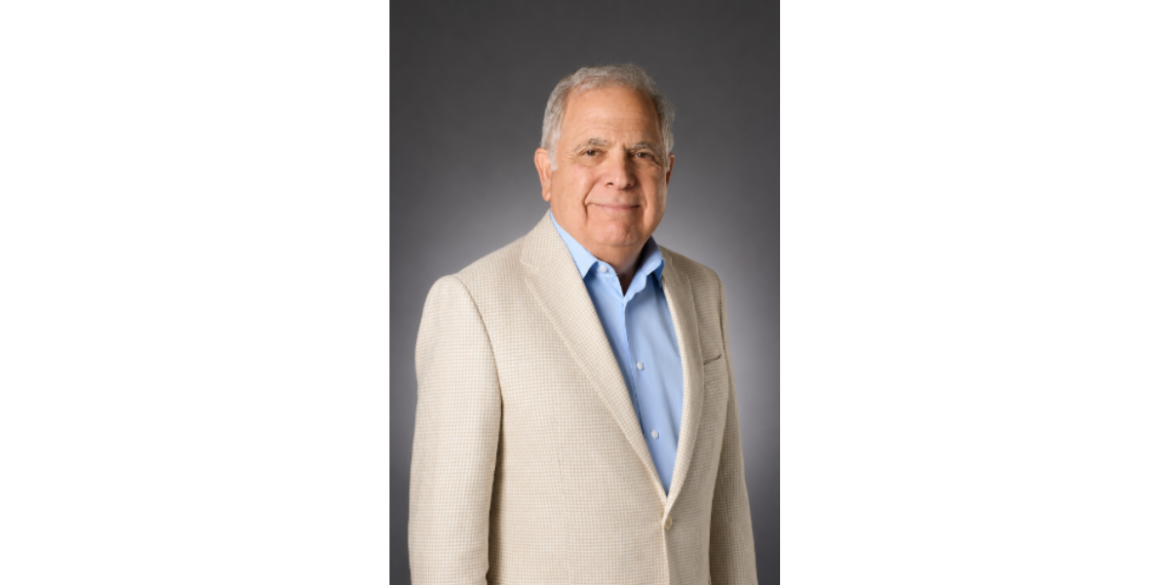
Steven H. Lavin
Steven H. Lavin, Chairman of OSI Group, brings decades of leadership and a deep commitment to helping new ideas flourish. Building on the legacy of his late father, Sheldon Lavin, he has helped grow OSI into a global leader in food manufacturing, championing innovation, quality, and sustainability. An attorney and former Chairman of Bank Leumi (USA), Steven also supports the next generation of innovators, including his sons Michael and Alexander, founders of Germin8 Ventures and Pasteur Labs, respectively. Across business and family, he brings experience, encouragement, and a shared ambition to turn bold ideas into lasting progress.