We are proud to share with our British Friends’ donors the important work made possible thanks, in part, to your generosity. Through the Hebrew University’s Clinical Legal Education Center, your support helps law students gain vital hands-on experience while enabling legal advocacy that protects vulnerable communities, public interests and the natural environment.
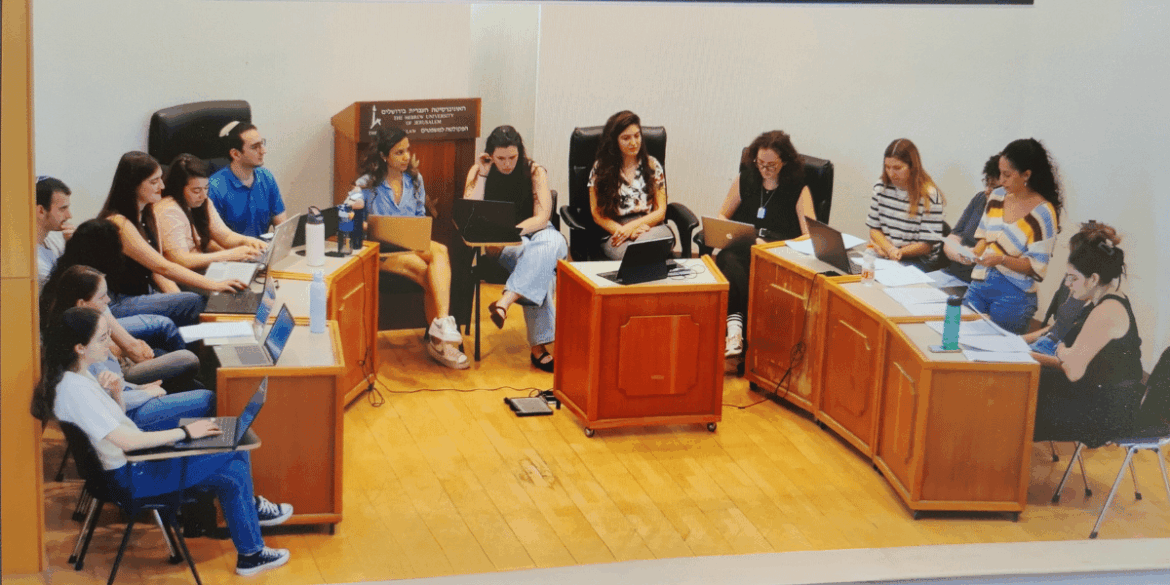
Title image: Moot Courtroom. Faculty of Law, Mount Scopus Campus
This third article in our series focuses on the Climate Change and Environmental Law Clinic, which addresses some of the most pressing environmental challenges facing Israel today. Its work combines legal expertise, public-interest advocacy and a commitment to protecting ecological systems for future generations.
A clinic for climate justice
The Climate Change and Environmental Law Clinic gives students the opportunity to work on real environmental and climate-related cases under expert supervision, while helping civic groups and communities challenge plans that may harm the environment, landscape or public wellbeing.
Its work is especially important because environmental damage is often complex, long-term and difficult to reverse. By combining legal analysis with scientific and planning arguments, the clinic helps ensure that environmental decisions are properly scrutinised and that the public interest is fully represented.
Challenging harm in the Judean Hills
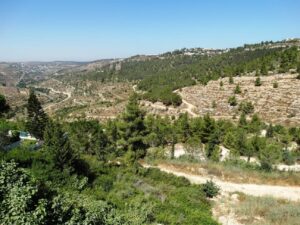
In one recent case, the Clinic submitted a formal objection on behalf of the civic movement “Saving the Hills of Jerusalem” to a proposed park-and-ride lot at the Ein Hemed junction.
The objection focused first and foremost on ecological harm. The plan would damage a narrow wildlife passage that functions as a sensitive bottleneck in the heart of the Sorek Valley ecological corridor, in the area of the Kesalon wadi (Nahal Kesalon), and could therefore undermine the functioning of the wider ecological system in the Judean Hills corridor.
The Clinic also argued that other ecological impacts had not been properly considered, including the climate implications of felling approximately 70 trees. In addition, it raised procedural and substantive concerns, including the failure to hold a discussion in the competent planning committee and the failure to carry out a serious examination of real and relevant alternatives. Such an examination is essential if environmental harm is to be reduced and every reasonable option properly assessed.
This case illustrates the clinic’s role not only in defending particular sites, but in ensuring that planning decisions meet the standards of law, transparency and environmental responsibility.
Why this work matters
The Climate Change and Environmental Law Clinic shows how legal advocacy can help protect both ecosystems and public decision-making. Its work helps ensure that environmental considerations are not treated as an afterthought, but as a central part of responsible planning and development.
This is another example of how your support creates impact far beyond the classroom. It allows the Hebrew University students to develop practical skills while contributing to work that defends land, biodiversity and climate resilience.
The clinic’s efforts also reflect the broader mission of the Clinical Legal Education Center: to combine legal education with meaningful social contribution. In this case, that means helping to protect the landscapes and ecological corridors that are vital to Israel’s environmental future.
Looking ahead
This series will continue to highlight the many clinics within the Clinical Legal Education Center, each of which addresses a different area of need. The Climate Change and Environmental Law Clinic is a powerful example of how legal expertise can be used to protect the environment, improve decision-making and support the public good.