A Jerusalem-based start-up is drawing attention for its work on a potentially transformative therapy for liver cancer — and at the heart of the story is Prof. Ofra Benny of the Hebrew University of Jerusalem. Combining academic expertise, pioneering research and entrepreneurial drive, the project highlights the vital role the Hebrew University continues to play in turning scientific discovery into real-world medical innovation.
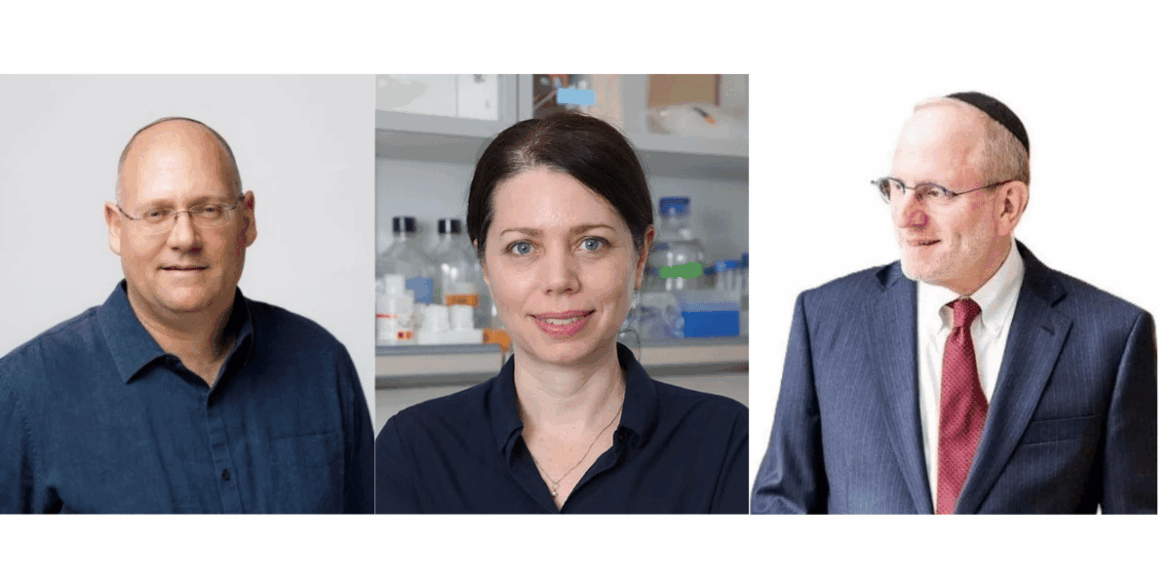
Title Image: Dr Yaron Suissa, Prof Ofra Benny, Dr Walter Wasser | Credit BDUK Therapeutics
Liver cancer remains one of the most difficult cancers to treat, particularly in advanced cases where current therapies can be limited in their effectiveness. Against that backdrop, any new approach that offers greater precision, better targeting and fewer side effects is of enormous interest. The work featured in Haaretz points to exactly that kind of progress: a treatment strategy designed to attack cancer more selectively, while sparing healthy tissue as far as possible.
Science rooted in the Hebrew University
Prof Ofra Benny, an Associate Professor at the Hebrew University’s School of Pharmacy and Head of the Lab for Nanomedicine and Tumour Microenvironment, has built her career around developing smarter, more targeted cancer treatments. Her research focuses on nanomedicine, drug delivery and cancer diagnostics, with the aim of improving treatment efficacy while reducing damage to healthy cells.
That expertise makes her a natural scientific partner in translational projects such as this one. The Hebrew University’s contribution is not limited to academic prestige; it is the research foundation that enables new therapies to be conceived, tested and refined. In this case, the university’s strength in cancer research and biomedical innovation is helping to bridge the gap between laboratory science and clinical application.
Why targeted treatment matters
Traditional cancer treatments can be effective, but they often affect healthy tissue as well as cancerous cells. That is one reason why researchers and clinicians are increasingly focused on precision approaches — therapies that can identify the tumour more accurately and minimise collateral damage.
Prof Benny’s work has long been aligned with that goal. Her research group develops targeted nano-therapies, advanced 3D models and computational tools that help scientists better understand how cancer cells behave and how they respond to treatment. This broader programme of research has already yielded patents and influential publications, demonstrating the depth of expertise at the Hebrew University.
A model of collaboration
One of the most encouraging aspects of this story is the way it brings together university research and entrepreneurial innovation. Start-ups can move quickly and take ideas towards practical use, but they depend on the kind of rigorous, high-level scientific insight that universities provide. The Hebrew University’s role is therefore central: it is where the ideas are developed, tested and given scientific credibility.
That collaboration also reflects a larger Israeli strength — the ability to translate academic excellence into solutions with global potential. In cancer research, where the need for better treatments is urgent, this kind of partnership can make the difference between a promising idea and a life-changing therapy.
Looking ahead
While much work remains before any new treatment becomes widely available, the significance of this development should not be underestimated. It is a reminder that breakthrough science often begins with deep, patient research, and that universities like the Hebrew University are essential to that process.
For supporters of the Hebrew University, this is exactly the kind of impact that makes investment in research so meaningful. It shows how academic excellence, when paired with innovation and collaboration, can help shape the future of medicine — and offer renewed hope to patients facing some of the most challenging diagnoses.
You can read the full article in Ha’aretz magazine: The Jerusalem Startup Developing a Breakthrough Therapy for Liver Cancer – Haaretz Labels – Haaretz.com