
Researchers have developed a new way to program human cells to make decisions much like tiny computers. They created a new system that allows cells to process several cellular indications at the same time while using fewer computations than previous methods. This means cells could one day be programmed to recognize specific signs of disease and respond only when needed. For example, they could detect cancer-related signals and release treatments directly where they are needed, reducing harm to healthy tissue. The breakthrough brings scientists closer to creating smart, programmable cell therapies that can automatically diagnose and treat disease inside the body.
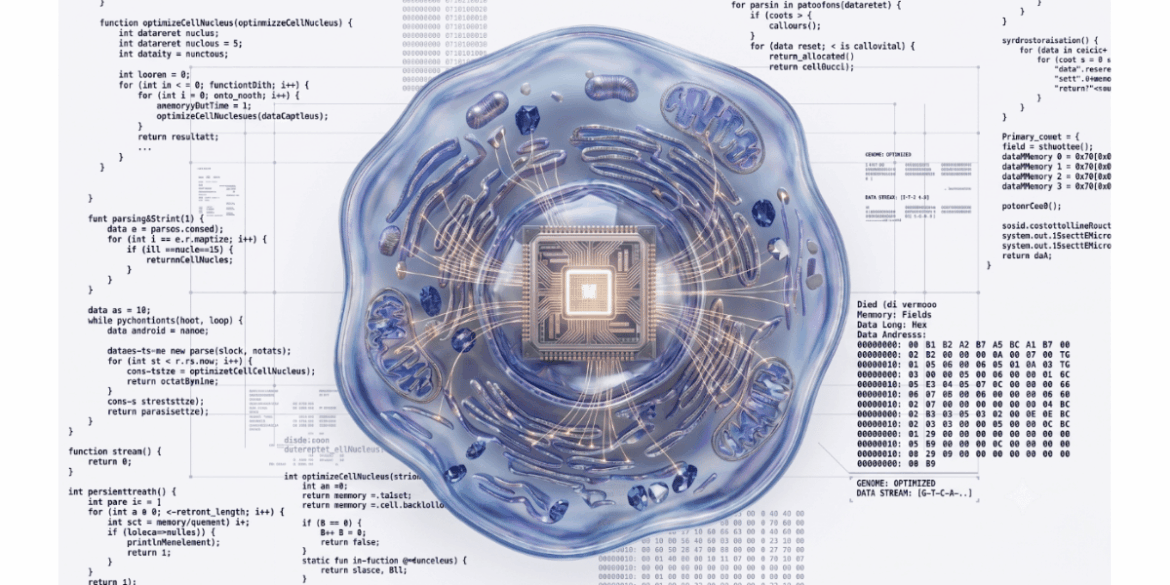
Title image: Artistic representation of cells performing biological computation Credit: Hebrew University of Jerusalem / AI-generated illustration
Researchers have developed a way to program human cells to perform calculations and make autonomous decisions, similar to how computer chips work.
In a new study published in Nature Communications, PhD student Keren Roas and Dr Lior Nissim from Hebrew University created artificial genetic systems inside human cells that can process information and follow complex instructions. In the future, this advance could help scientists build smarter cell-based treatments for diseases such as cancer.
Why does this matter? Scientists have long wanted to program cells to recognize diseases and respond automatically. However, building complex genetic programs inside cells has been difficult due to the lack of the required genetic building blocks.
Traditional genetic circuits work a bit like a tall building: each new instruction requires another layer of computations inside the cell. As the system becomes more complicated, the performance and reliability of these computations decrease rapidly.
“Our new approach allows cells to carry out complex programs using far fewer calculations and genetic building blocks,” said Dr Nissim. “This makes it possible to build much more advanced biological programs without losing functionality.”
The researchers used a natural process called RNA trans-splicing, in which pieces of genetic messages can be joined together inside a cell, and combined it with natural and artificial regulatory elements they engineered.
They designed special molecular tools that act like biological processors. Important genetic elements were engineered to trigger the expression of selected genes according to a predefined genetic program.
Because several signals can be processed simultaneously by complex computations, the system is much more efficient than previous designs.
To demonstrate the technology, the team built biological devices that work similarly to parts of a computer.
One example was a biological “full adder,” which can perform simple binary math, similar to the same 3-bit unit in a computer processor.
The researchers also created a biological version of a multiplexer, an electronic component that selects one signal from several options and sends it forward. They tracked these signals using fluorescent proteins that glow in different colors.
The system even included a safety feature. If the cell detected an invalid or overloaded configuration, it produced a special warning signal. In the future, this could help prevent errors in medical treatments by triggering protective responses.
Potential Medical Uses
The technology could one day be used to create smart therapeutic cells that constantly monitor their surroundings and respond accordingly.
For example, a programmed cell could check for several disease markers at once and release a treatment only when a specific combination is detected. This would allow therapies to target diseased tissue more precisely while reducing damage to healthy cells.
To demonstrate this idea, the researchers programmed cells to produce Interleukin-15 (IL-15), an immune-system protein that can help cancer-fighting immune cells become more active.
By reducing the amount of genetic material and energy needed for cellular decision-making, this new system provides scientists with a powerful and flexible toolkit for programming living cells.
As technology develops, future medicines may be designed much like software, using biological “code” to tell cells exactly when and how to diagnose and respond to disease.
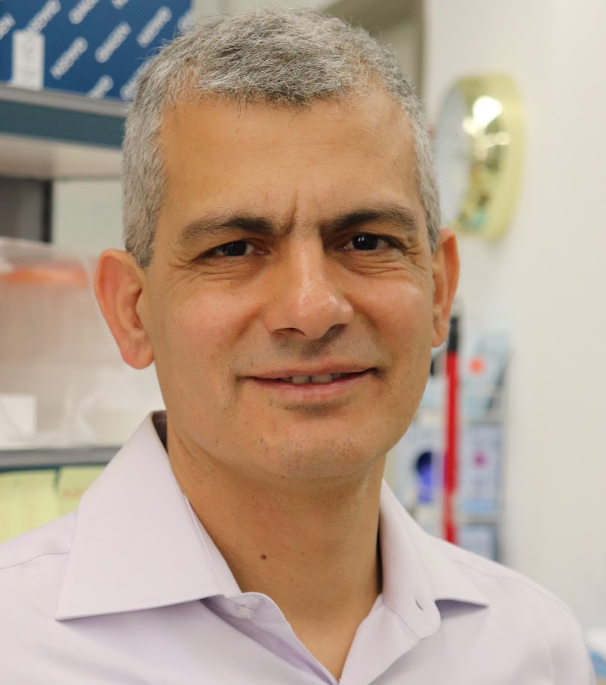
Dr Lior Nissim | Credit: Nissim Lab Keren Roas | Credit: Nissim Lab

Media Contacts
Dr Lior Nissim Tel: +972 54-623-2747 | Email: lior.nissim@mail.huji.ac.il
Research Paper
Roas, K., Kovalski, I., Mouhadeb, O. et al. Modular Scalable Synthetic Gene Circuits for Complex Functions Within Minimal Computational Layers in Human Cells. Nat Commun (2026).
DOI: https://doi.org/10.1038/s41467-026-74408-y
Authors:
Keren Roas, Ilanit Kovalski, Odelia Mouhadeb, Tamar Aminov, Hadas Weinstein-Marom, Lior Nissim
Affiliations:
- Department of Biochemistry and Molecular Biology, Institute for Medical Research Israel-Canada, Faculty of Medicine, The Hebrew University of Jerusalem, Jerusalem 91120, Israel.
- Laboratory of Cellular Immunotherapy & Synthetic Biology, MIGAL – Galilee Research Institute, Kiryat Shmona, Israel
- Dept. of Biotechnology, Tel-Hai University of Kiryat Shmona in the Galilee, Upper Galilee, Israel