
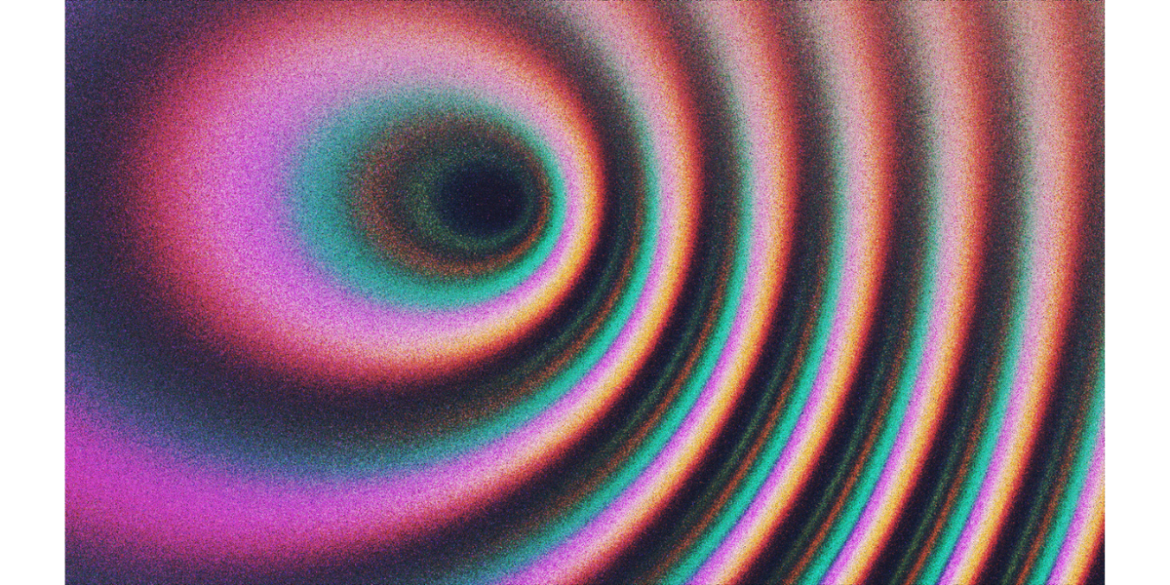
New study demonstrates a superconducting memory bit that operates close to the minimum energy allowed by physics
Every time a computer stores or erases information, it uses energy. The amount is tiny for a single operation, but those operations happen billions of times every second. For decades, scientists have wondered just how little energy a memory device could use before reaching the fundamental theoretical limit set by the laws of physics.
Now, researchers have shown that it is possible to come surprisingly close.
Published in Nature Communications, the study demonstrates a superconducting memory bit that operates using only about five times Landauer’s limit, the theoretical minimum amount of energy needed to erase one bit of information.
Instead of using conventional electronic components, the researchers stored information in a superconducting vortex; a tiny magnetic whirlpool that forms inside certain materials when they are cooled to extremely low temperatures.
The team trapped a single vortex between two stable positions. Like the zeros and ones used in every digital computer, those two positions represented a single bit of information.
“Our work measures the energy required to operate a superconducting vortex-based memory bit,” said Hebrew University researchers Dr Yonathan Anahory, who led the study with Nofar Fridman. “We found that it can run at approximately five times Landauer’s limit, bringing it remarkably close to the minimum permitted by physics.” To put this number in perspective, a modern computer typically requires more than a million more time energy to perform the same operation.
Measuring such a tiny amount of energy was no easy task. Rather than trying to detect the temperature increase caused by the minute heat released by the moving vortex, the researchers tracked its magnetic response using an ultra-sensitive SQUID-on-tip microscope.
“A vortex is an exceptionally small and delicate object, so measuring the energy dissipated by its motion is a major experimental challenge,” said Fridman. “By following its magnetic response, we were able to compare its energy cost with the fundamental limits of information processing.”
The researchers emphasize that the device is still experimental. It operates only at around 4 kelvin (minus 269 degrees Celsius), making it unsuitable for everyday computers.
However, quantum computers already operate at similar cryogenic temperatures. In the future, devices like this could provide an energy-efficient way to store classical information inside those systems.
While other physical systems have previously approached Landauer’s limit, the researchers say this is the first demonstration of such low energy consumption using a single superconducting vortex.
The work provides a proof of principle that superconducting vortices can serve as ultra-low-energy memory elements. More research will be needed before the technology can be scaled into practical memory devices for cryogenic and quantum computing.
Dr Yonathan Anahory (Credit- Yoram Aschheim)
Nofar Fridman (Credit- Yoram Aschheim)
Media Contacts
Dr. Yonathan Anahory, Faculty of Science, Hebrew University of Jerusalem
Tel: +972 52-611-2511, Email: yonathan.anahory@mail.huji.ac.il
Research Paper
Fridman, N., Keren, I., Noah, A. et al. Approaching Landauer’s limit in a single superconducting vortex memory bit. Nat Commun (2026).
DOI: https://doi.org/10.1038/s41467-026-77988-x
Authors:
Nofar Fridman, Itai Keren, Avia Noah, Yishay Zur, Martin E. Huber, Nadav Katz, Roland Willa, Hadar Steinberg, Yonathan Anahory
Affiliations:
- The Racah Institute of Physics, The Hebrew University, Jerusalem, 9190401, Israel
- Center for Nanoscience and Nanotechnology, Hebrew University of Jerusalem, Jerusalem, 9190401, Israel
- Faculty of Engineering, Ruppin Academic Center, 40250, Emek-Hefer, Monash, Israel
- Departments of Physics and Electrical Engineering, University of Colorado Denver, Denver, CO 80217, USA
- Qarakal Quantum Ltd., Derech Menachen Begin 144, Tel Aviv 6492102, Israel
- Institute of Systems Engineering, School of Engineering, HES-SO Valais-Wallis, rue de l’Industrie 23, 1950 Sion, Switzerland
- Institute for Theory of Condensed Matter, Karlsruhe Institute of Technology, 76131 Karlsruhe, Germany
- Heidelberger Akademie der Wissenschaften, 69117 Heidelberg, Germany