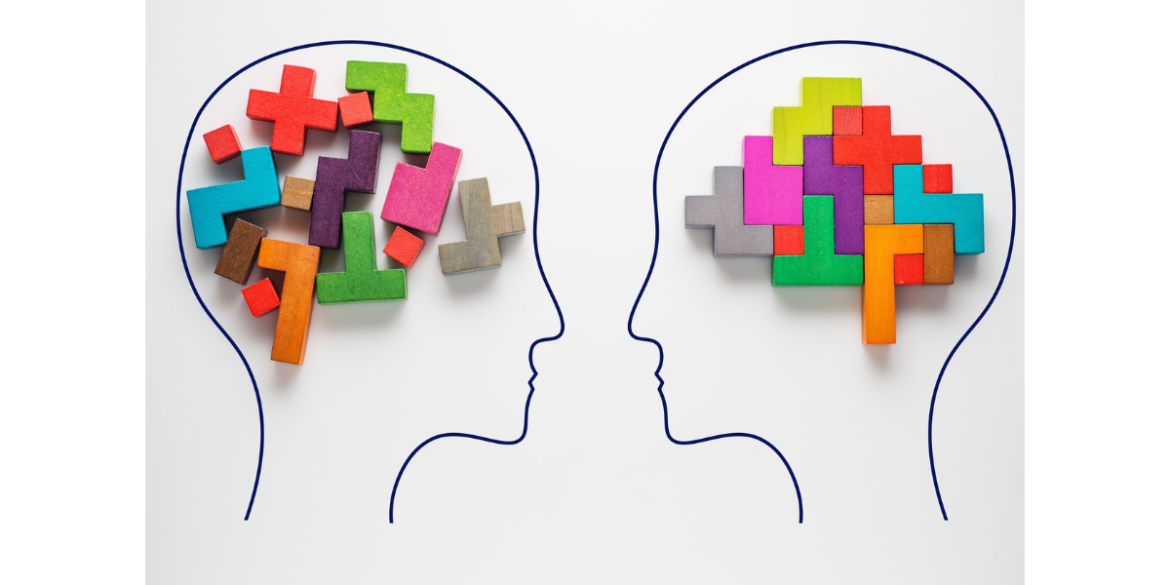
A new study reveals that autistic and non-autistic adults perform equally well on perceptual tasks but differ significantly in how their brains process feedback and evaluate decisions. Researchers identified three distinct differences in neural and behavioral responses to mistakes, task difficulty, and recent experiences, which remained consistent in a follow-up study conducted one to two years later. The findings provide new insights into the neurocognitive mechanisms underlying autism and may help explain differences in how autistic individuals adapt to changing environments.
Why do some people adapt more easily than others to changing circumstances? A new international study led by Prof Merav Ahissar of the Hebrew University’s Edmond and Lily Safra Center for Brain Sciences (ELSC) offers fresh insights into how the brain processes feedback, and why this process may differ in autism.
The researchers discovered that although autistic and non-autistic adults performed equally well on a simple auditory task, their brains responded differently to information about their mistakes, the difficulty of their decisions and their recent experiences.
“Our findings suggest that the differences associated with autism are not necessarily in the ability to perceive information accurately, but in how the brain evaluates experiences and uses them to guide future decisions,” explained Prof. Ahissar. “We identified several distinct processes that may help us understand why adapting to rapidly changing situations can be more challenging for autistic individuals.”
What happens when the brain receives feedback?
The study involved 33 autistic and 35 non-autistic adults who listened to pairs of tones and identified which was higher in pitch. After each answer, participants received immediate feedback indicating whether they were correct or incorrect, while researchers recorded their brain activity using electroencephalography (EEG).
Both groups achieved similar accuracy, approximately 70%, but the researchers identified three significant differences.
First, autistic participants showed a markedly reduced brain response to negative feedback, measured through an electrical signal known as feedback-related negativity (FRN).
Second, unlike non-autistic participants, whose brain responses varied according to how difficult a decision had been, autistic participants showed significantly weaker sensitivity to task difficulty.
Third, non-autistic participants adjusted their subsequent decisions more strongly following easy and successful trials, apparently giving greater weight to information they could reliably trust. This adjustment was substantially weaker in autistic participants.
Together, the findings suggest that autism involves differences in how the brain evaluates both external feedback and its own estimates of decision reliability.
A consistent pattern over time
To confirm their findings, the researchers conducted a follow-up experiment one to two years later with 51 participants. All three differences were replicated and showed stability within individuals across sessions.
Interestingly, the three measures were not significantly correlated, suggesting that they reflect distinct neurocognitive processes rather than one underlying mechanism.
When combined in a machine-learning model, these measures distinguished between autistic and non-autistic participants with approximately 80% accuracy. However, the researchers emphasize that the findings do not establish a diagnostic tool for autism.
Understanding autism from a new perspective
The study contributes to growing evidence that autism involves differences not only in sensory processing, but also in how the brain evaluates experiences and updates expectations.
Importantly, the findings do not suggest that autistic individuals perceive information less accurately or cannot learn from feedback. Rather, they point to differences in how recent information influences subsequent decisions.
Supported by the European Research Council, the Israel Science Foundation and Gatsby Foundation, the study offers new insights into the mechanisms underlying behavioral flexibility in autism, potentially paving the way for a deeper understanding of how the brain learns from experience.
Media Contacts
Prof Merav Ahissar, Edmond & Lily Safra Center for Brain Sciences, Hebrew University, Jerusalem
Tel: +972 052-3400422, Email: msmerava@gmail.com
Research Paper
Nathaniel J. Zuk, Jaroslav Y. Slobodskoy-Plusnin, Yarden Weiss, VishnuPriya Sampath, Kira M. Düsterwald, Athena Akrami, Merav Ahissar
DOI: https://doi.org/10.1101/2024.07.23.604831
Authors:
Nathaniel J. Zuk, Jaroslav Y. Slobodskoy-Plusnin, Yarden Weiss, VishnuPriya Sampath, Kira M. Düsterwald, Athena Akrami, Merav Ahissar
Affiliations:
- Edmond & Lily Safra Center for Brain Sciences, Hebrew University, Jerusalem, Israel
- NTU Psychology, Nottingham Trent University, Nottingham, United Kingdom
- Gatsby Computational Neuroscience Unit, University College London, London, United Kingdom
- Sainsbury Wellcome Centre, University College London, London, United Kingdom