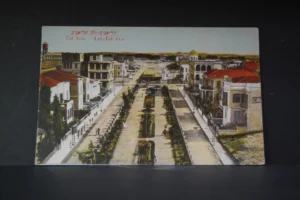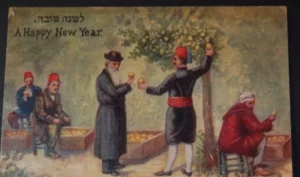
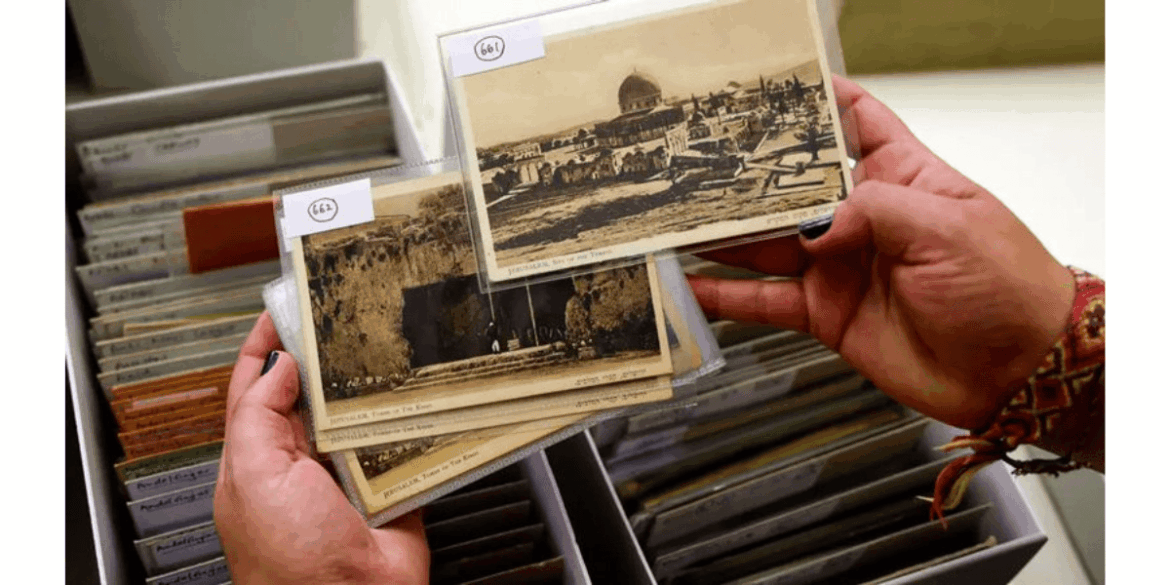
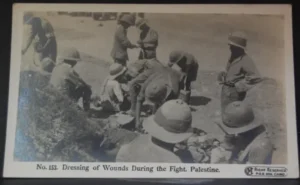
It’s 1917. A lone British soldier, stationed at a dusty railway junction in Ramla, scribbles a hasty note: “Frank Ulrich died here. We lost a lot of men. I hope to see you soon”. That postcard – one of 150,000 in the David Pearlman Collection – now sits at the Hebrew University’s Folklore Research Centre in Jerusalem.
What began as the private mishegoss of a London gentleman, has become a public and academic treasure: the world’s largest collection of Holy Land postcards, donated to the Hebrew University by David Pearlman, a meticulous accountant who spent six decades hunting them down. Today, under the guidance of Dr Dani Schrire, these “tweets from the past” are being catalogued, digitised and prepared to reveal layers of the region’s story that no single image could capture.
The 19th Century’s WhatsApp
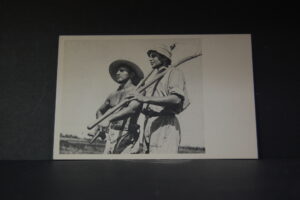
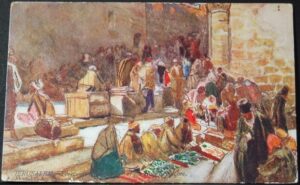
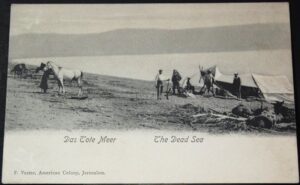
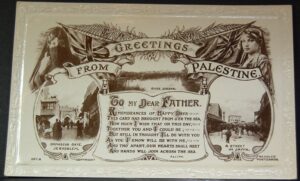
Postcards ruled communication from the 1890s to the 1920s, their golden age. Tourists, pilgrims and soldiers sent quick updates home: “Yesterday Bethlehem, today Jerusalem, tomorrow Nazareth. It’s so hot!” These cards shaped how the world imagined the Holy Land – camels against golden sunsets, overflowing Dead Sea, Biblical wells, Hasidim in the streets…
Beyond the Icons
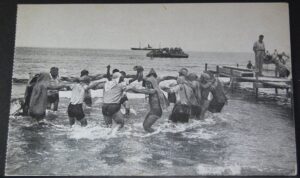
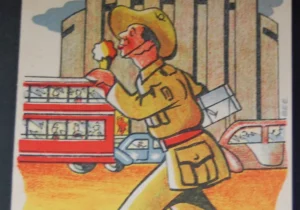
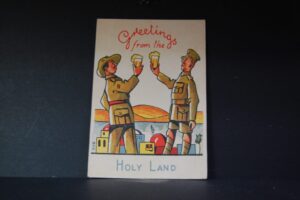
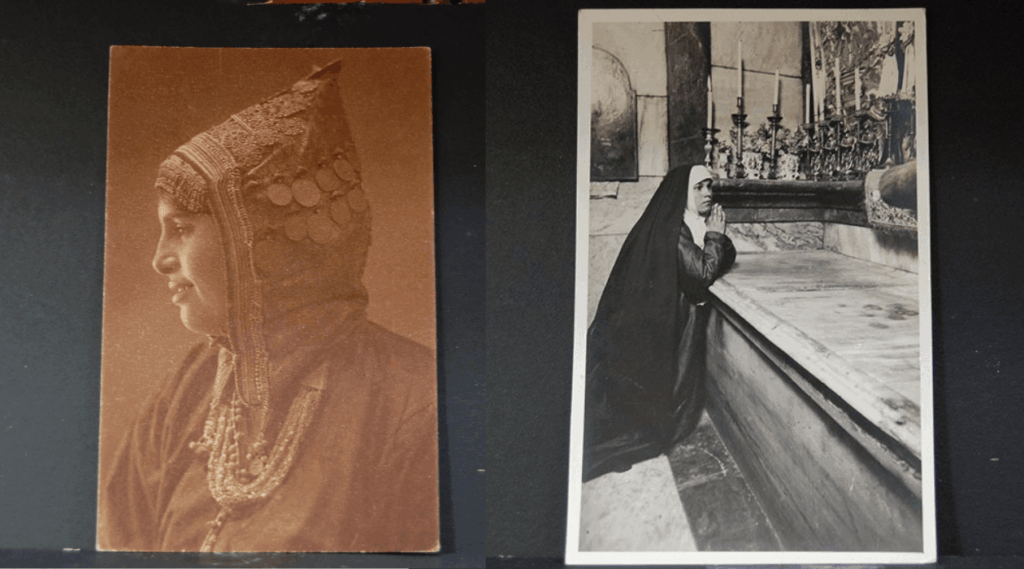
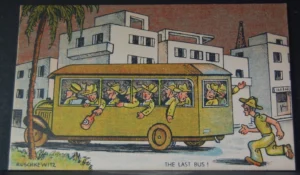
This mountain of postcards contains all the ‘usual suspects’ – Temple Mount, the Holy Sepulchre, palm-lined desert roads – but also some fascinating odd-balls: World War I propaganda shows British captives under German lenses; Some 1970s IDF caricatures by Dosh; A cheeky British soldier sends a woman-in-uniform card and scribbles: “What do you say about this? wink wink”. Dr Schrire confesses his fondness for the “ugly” ones – PR for Netanya’s Palace hotel, highway junctions – ‘sore thumbs’ in an otherwise pristine postcard scenery.
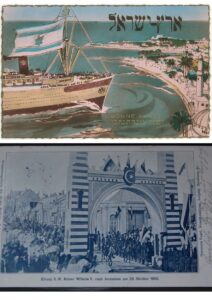
Dr Schrire calls the collection “kaleidoscopic.” Images by Palestinian photographer Karimeh Abbud sit alongside drawings by Bezalel artists and a Chairo-based Christian firm’s promo.
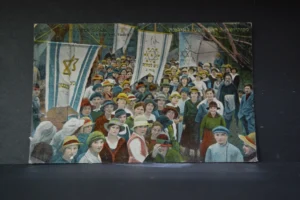
We see a thousand views of the Mount of Olives or Western Wall, captured in black-and-white, hand-tinted lithographs or 1970s gloss. Together these repetitions build a rich picture: the seemingly formless reel reveals the changes in what caught our eye over a century.
A Meticulous Collector
David Pearlman wasn’t a hoarder. His collection was very intentional: without internet or mobile (save a reluctant Covid-era flip phone), this polite ‘nudnik’ phoned and wrote letters to dealers worldwide, piecing together publishers’ lost catalogues from defunct firms. His 30-file (paper!) index tracked series gaps: “Did publisher X make 16 or 20 cards of Tiberias?” which he kept trying to fill – and scholars ended up phoning him for answers.
“He’d have been the best research assistant ever!” says Dr Schrire – but Pearlman’s work went deeper, fuelled by knowledge and passion. Eventually, he wanted these cards to “return to Zion,” ensuring his life’s gathering wouldn’t scatter at auction. Thus the Hebrew University became their permanent home.

From Shoeboxes to Digital Life
Slowly, shoebox cartons gave way to acid-free archive boxes, but Pearlman was averse to digitisation – “it offers no connection to the real object, no feeling!”. He organised the postcards by publisher (a collector’s logic) – but this is less relevant to both researchers and casual gazers. So now, painstakingly digitised by students at the Folklore Research Centre, the collection yields place-based searches: all the Ramla/ Jerusalem/ Seaside postcards can be found in a flash, regardless of source.
Today, dozens of metadata fields capture each card’s journey: origin, postmark (Greek stamps on Jerusalem cards from Haifa cruises), and fleeting messages. Dr Schrire envisions a mobile app where you could point your phone at Masada, and see historic views overlay the present view. And so everyday voices on trashed letters and spared postcards survive for our modern eyes to puzzle over.
And Now?
In our turbulent Middle Eastern times (but aren’t they always?), when everyone wants a piece and a say over this mad corner of the world, these postcards remind us that possession is an illusion. Between Rabbis and tourists, Israelis and Palestinians, Jerusalem slips through possessive hands; a place held by many – and none. Christian pilgrims, Zionist dreamers, Turkish printers, falafel stalls – all claim it, only to be nudged aside by history’s long gaze.
These postcards preserve what wars and clearances discard: ordinary attachments to an extraordinary place. As Dr Schrire notes, you can hold the Western Wall fifty ways, in fifty voices – it doesn’t care. In divided times, that humility matters, and Pearlman’s mishegoss now invites us all to have a look, hold this land for a brief moment – and move on.